Book Review : Mark Strizic “Melbourne Marvellous to Modern”
“Melbourne: Marvellous to Modern”
by Mark Strizic - A book review
Discovering Strizic & The time capsue
I’m not sure how I discovered Mark Strizic’s work but I expect it was talking to my friend Robert Young. I know I had the chance to see As Modern as Tomorrow: Photographers in Postwar Melbourne, in the Keith Murdoch Gallery in the State Library of Victoria from 1 July 2011 to 5 February 2012, where there was a selection of his photos. I must have bought the book at that time. It was before I started putting the purchase date in all the books I buy. I remember how exciting it was to be able to go back to the same locations and see what had changed and what had remained the same in the intervening decades. His work certainly shaped the way I saw and photographed Melbourne and really got me thinking about the way time effects photography and what an important part any photographer can play in the memory of a city, if they choose to follow that path. This book and exhibition cemented my interest in photographing many aspects of Melbourne, from the inner city to the edges.
The feeling of being in a time capsule in “Marvellous to Modern” is strong, being able to see back into the decades following World War Two, I can really see what the city looked like and surprisingly how much is still very familiar, even now in the 2020’s - despite the massive changes, much is still quite recognisable - the most obvious difference I noticed when I first re visited the book was the style of the clothing in the book, where as the streetscapes and buildings still felt quite familiar.
‘today his exercises in black and white have given us a great visual memoir of the dreaming Victorian city Melbourne once was”
I spent some time going to the locations in the book and attempting to recreate a time warped version of some of the images, which was a fun excercise. The real challenge was trying to remake the photos, Most of the locations for the images in the book are given as titles or in the descriptions so the process is really is to undertake. I’m quite tempted to go back and do the same exercise again.
The Quiet Frame & The 'Anti-Decisive Moment'
Looking at Strizics work again after so much time reminds me that Melbourne doesn’t need a natural harbour to be interesting and photogenic, Its quite interesting looking at images made these decades ago in the age of instagram and Hosier Lane and people photographing every meal they eat. The quiet studies of everyday buildings and un posed shots of people even feels different than early street photograph. I’m sure that Strizic would have been conscious of Bressons ‘Decisive Moment’ - but looking at the images with people, it’s almost like he’s avoiding that concept.
Queensberry Street & Local Continuity
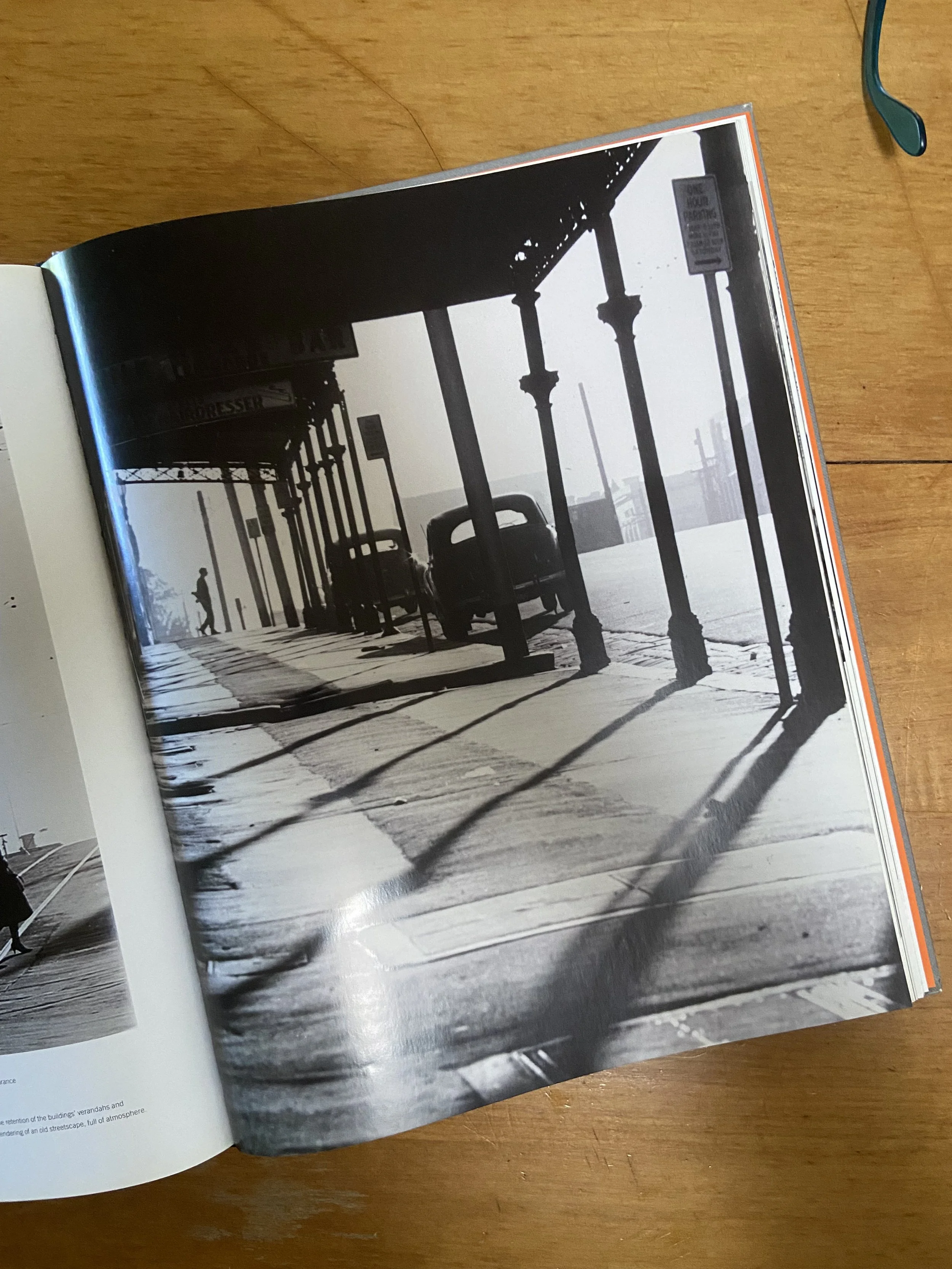
Image from the book of Queensberry Street in North Melbourne.
One of my favourite images in the the book is “Queensberry Street at Errol Street", North Melbourne. 1963 - it’s close to where I lived many years ago and around the corner from Image Science where I pickup my fine art prints and is remarkably unchanged since the image was shot over fifty years ago.
Strizic was the first Melbourne photographer whose work really resonated with me. I’d looked at plenty of work before from Melbourne, having lived here over ten years before discovering his work, but I’m sure that once I saw this work both in the flesh and through the book something switched in my mind which has stuck with me to this day - and it gave me a certain reference point as to what many streets I’ve walked looked like in the decades preceding me. The thing which really changed for me when I first saw this was the value of long term observation, seeing his work as a reference to other decades, maybe my work can serve as a reference to someone in the 2050’s or 60’s. In the period of massive change that we’re currently undergoing, I’ve always been interested in architecture - the first ever work experience I did at age 13 or so was at an architecture firm in Grand Rapids, and my paintings were strongly influenced by Edward Hopper.. this got even stronger when I took up photography around 2003 or so.
I’m not sure that Strizic would recognise Melbourne, in the dozen or so years since he passed away the city has changed dramatically, having said that, there are places and corners which remain - but they certainly look different. Flipping the book open to a random page, I found the image “ At the Melbourne Public Library, 1957” Aside from the number of people and the clothing the single man in the image is wearing, its could be taken today - Every time I go to the State Library of Victoria, there’s a crowd of people sitting on the steps and the lawn where I’d expect people didn’t do that much if at all in the 1950’s - There were so few people in Melbourne and I think that certainly gave his photos a certain mood. This lack people in his photos certainly has influenced the way I shoot - Almost compulsively avoiding photographing people unless it’s in a studio environment. Continually flipping through the book the next photo I found was '“Rule Britannia 1954'“ the caption of the images says '“..patrons outside the Britannia Hotel” which was on the corner of Queen and Bourke Streets - which now Im guessing is the Commonwealth Bank HQ or small shopping mall - This was the thing which really grabbed me about Strizic, and other photographers from earlier times is their work is a window into the time they shot in. Photographs of this kind are very much of their time.
Windows into Time: From Jimmy Watson's to the Block Arcade
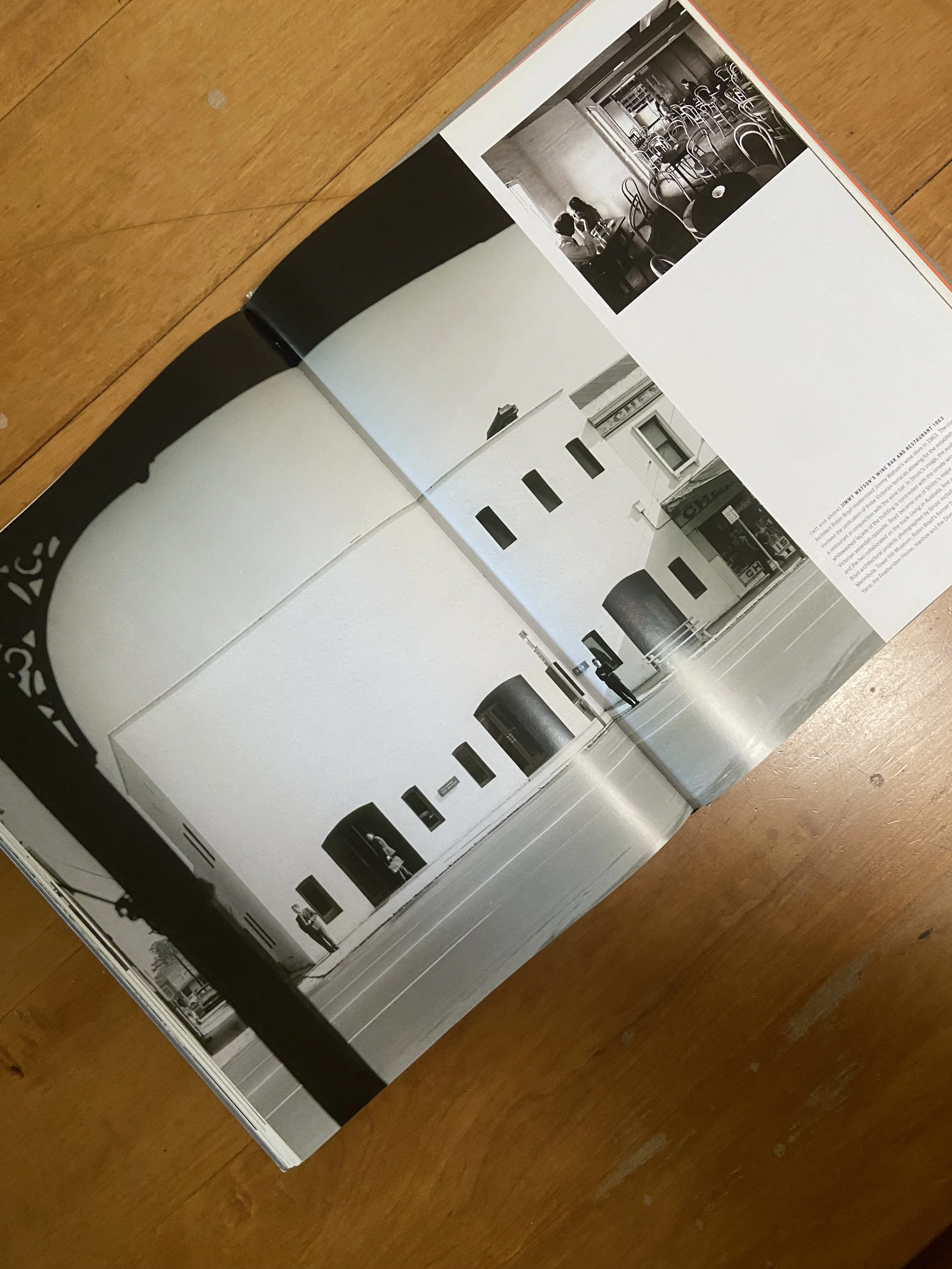
Image of Jimmy Watsons on Lygon Street in Carlton
Having revisited the book for the first time in a long time- it’s quite comforting to see many places I recognise, the facade of Jimmy Waston’s , a few doors down the street from where I worked for nearly a decade, is close to unchanged. The same can be said for an image of the The Regent theatre from 1967 - The building remains, maybe even the lights which light up the marqueee but the dress of all the people, the. models of cars date the image, almost to the year. The image I mentioned earlier from Queensberry St in North Melbourne could be taken today, the models of the cars is the only give away. Seeing many shots of his, from South Melbourne to Richmond, from the corner of Collins and Elizabeth in the city to the facade I mentioned of Jimmy Watsons in Carlton so many could really have been taken today. There’s one shot “Near the intersection of Exhibition and Victoria Streets” which I drove past this morning - which is now an empty building - once offices for the Cancer Council.
I’m sure Strizic would recognise many parts of the Melbourne of today, but he would also be surprised by the number of people living in the city itself - which certainly wasn’t a common occurrence when he was working.
From Imitation to Observation
I’m sure that looking at this book when I did further triggered my documenting of Melbourne - I’d say he’d play a part in all the longer term projects I undertake - the idea of revisiting the same places over time was definitely somehow confirmed by looking at his work over the years and the High Street Project was the first example of this, Also seeing how many of the buildings he documented and and how the areas changed certainly spurred me in this direction.
Searching the State Library of Victoria catalog for Strizic images is quite a journey -
give it a try here - https://find.slv.vic.gov.au/discovery/collectionDiscovery?vid=61SLV_INST:SLV&collectionId=81271907190007636
I’ve been surprised to see the value of the book with prices varying from $250 AUD to $350 USD. Clearly was a short print run.
