From digital photograph to Object
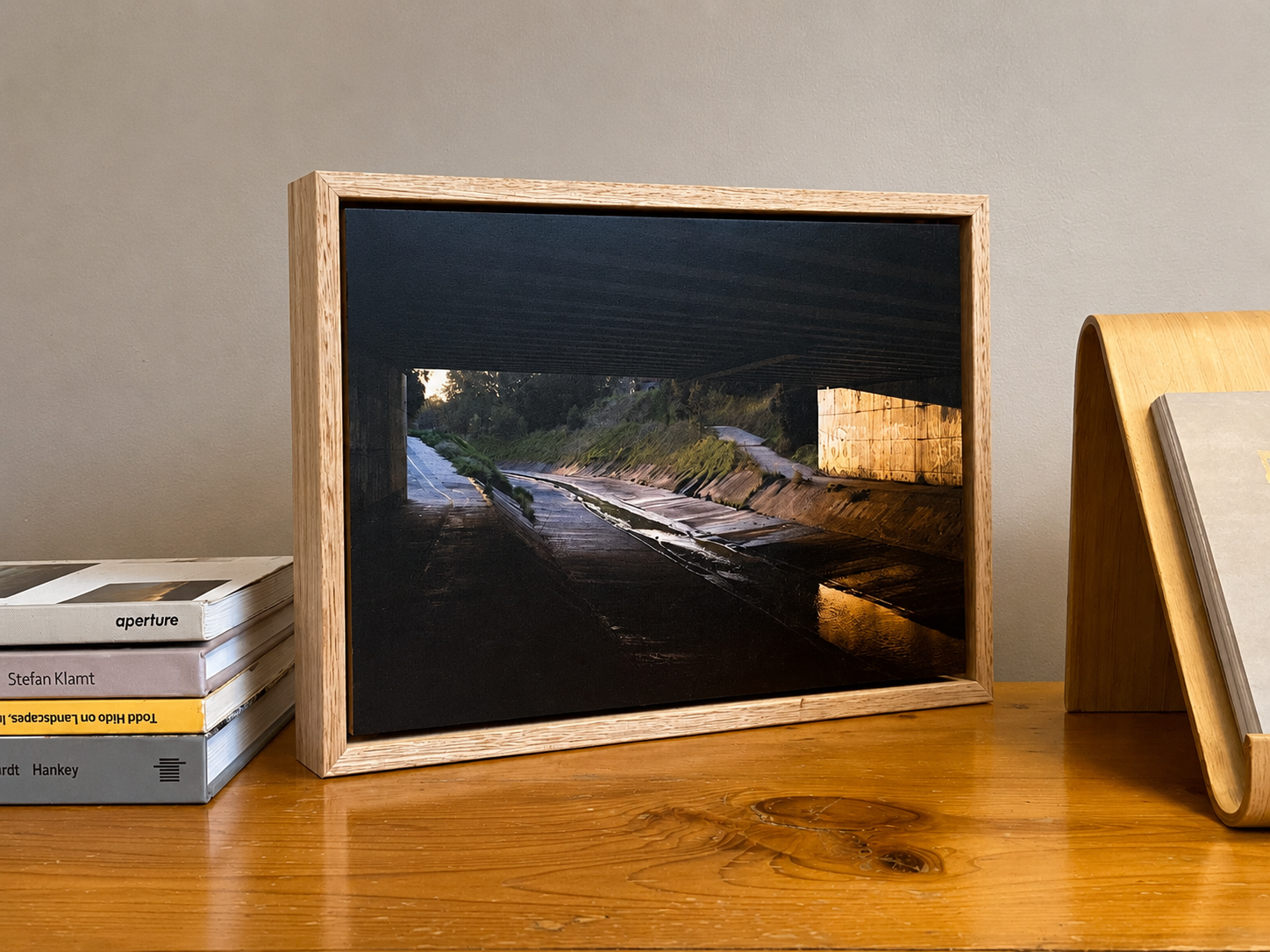
Timber Edition Test Print One - Moonee Ponds Creek A4 Size.
Digital photographs are just the beginning. I don't really consider my work to be finished until it's printed. I create high-resolution TIFF files of all my favourite images. The prints themselves are wonderful, but they're not a finished display object. Instead, they give people the opportunity to frame them to suit their own tastes and spaces.
Back in 2024, I experimented with mounting a few test prints onto recycled pieces of timber in my workshop. They were simple prototypes, but they convinced me there was something appealing about photographs becoming objects rather than remaining as sheets of paper. I revisited the concept a couple of months ago and started researching and planning in earnest.
Over the years I've built a carefully maintained archive of fine art prints. They're the prints I exhibit, take to markets and use when discussing my work. For me, the ideal presentation has always been thoughtful archival framing by an experienced framer using conservation materials that will protect the print for decades. It's a beautiful way to display a photograph, but it also adds time, cost and complexity—particularly if a print needs to be shipped.
Since those early experiments in 2024, I'd been looking for a way to present my photographs as finished objects without asking people to invest immediately in custom archival framing. I kept returning to the idea of timber mounting because it offered a simple, elegant solution.
Once I'd narrowed my search to two options—timber-mounted prints and Dibond aluminium—I decided to order an A4 Timber Edition from Print On Wood, a Melbourne-based company. I was blown away from the moment I opened the carefully packaged box. The colour accuracy immediately impressed me, but what really stood out was the way the timber became part of the photograph without competing with it. The warmth and softness of the object make it feel sturdy, almost like a piece of furniture, while remaining surprisingly light. Smaller pieces stand comfortably on a desk or shelf, while both the smaller and larger sizes are equally at home on a wall. They're substantial enough to feel like permanent objects without becoming overwhelming. As soon as I placed it in my home, it felt as though it had always belonged there. Since receiving that first Timber Edition, the Dibond option has quietly slipped from my mind.
I'm very careful with my print archive. Whether I'm exhibiting work or bringing prints to markets, I see archival fine art prints as the foundation of my photographic practice. Their natural home is behind museum-quality glass, framed by an experienced framer using conservation materials designed to protect the work for decades.
That level of presentation takes time, expertise and adds significantly to the overall cost, particularly when shipping framed work beyond Melbourne. It also highlighted an opportunity for a different kind of presentation. Timber Editions retain the quality of the photographic print but arrive as finished photographic objects, ready to hang on a wall or place on a shelf without the additional decisions and expense of custom framing.
Archival fine art prints remain at the heart of my work. Their flexibility allows every collector to choose a presentation that suits their own space and taste. Timber Editions take a different approach: they're finished photographic objects, designed to be enjoyed from the moment they arrive.
Explore the Timber Editions collection
https://www.wurstercreative.com/timber-editions
The image below is a digital mockup showing how a Timber Edition may appear in a home.
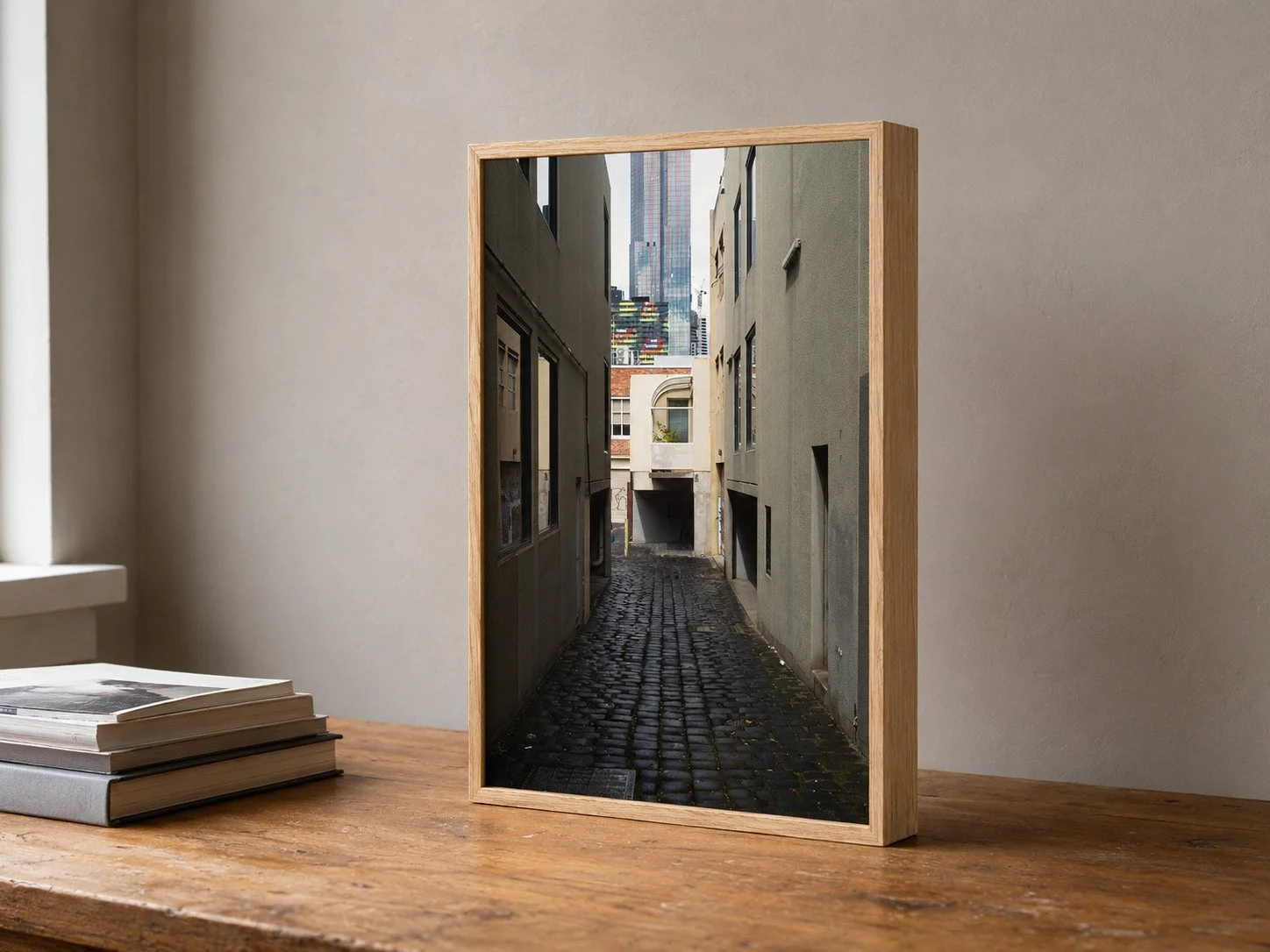
Carlton Laneway — Timber Edition
